|
 Centre for Addiction Centre for Addictionand Mental Health Please note: This is the very old CAMH website from 2012, made available for legacy purposes. |
|
|
|
Queen Street Redevelopment
|
The 1900s - History of CAMH and the Queen Street SiteThere weren’t too many changes in the first half of the 20th century. There was still stigma; mothers would tell their children to hold their breath as they went by on the streetcar so that they could avoid impurity. The Provincial Lunatic Asylum was still dealing with overcrowding; up to 1,600 patients lived there at one time. The significant overcrowding and government neglect led to the deterioration of the building.
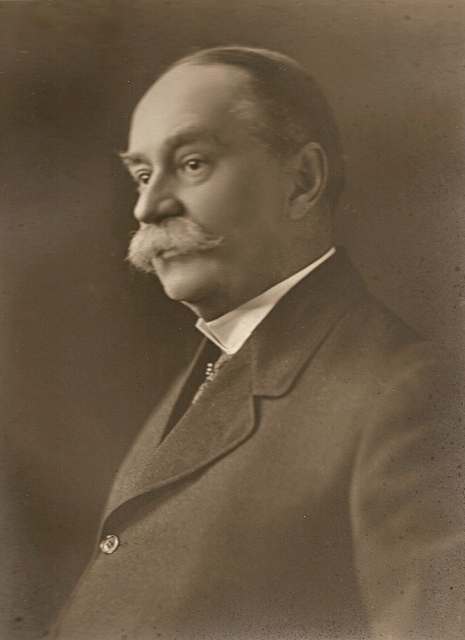
In 1905, the name changed to ‘Hospital for the Insane, Toronto’, as now “the patients are regarded as sick people and are treated as such,” according to Dr. Charles Kirk Clarke, Medical Superintendent.
Dr. Charles Kirk Clarke, circa 1907.
From 1905 to 1911, Dr. Clarke recommended selling off and relocating the overcrowded and henceforth, poorly maintained facility, without success. A new facility in Whitby was designed to replace the one on Queen Street; however, both continued to be utilized after the opening of the Whitby facility in 1919.
In 1919, the name changed again; now called the ‘Ontario Hospital, Toronto’.
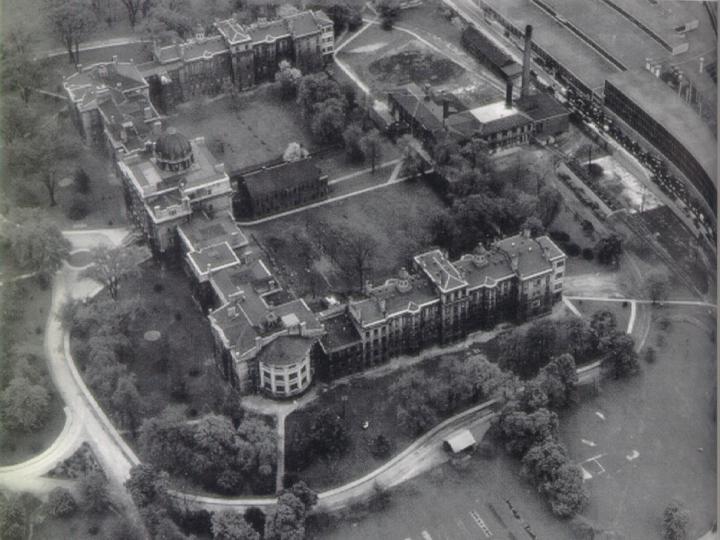
The Queen Street site shortly after the end of the Second World War.
Medically, treatment advanced from an emphasis on sedatives, physical therapies, and psychosurgery to the adaptation of lithium and the major tranquilizers in the early 1950s. Baths used to calm patients remained as part of the treatment.
Between 1953 and the 1970s, the first generation of anti-psychotic medications, hampered by muscle stiffness and other side effects, were in use.
In 1954, construction began on the new Administration Building on Queen Street and in 1956, the building was completed.
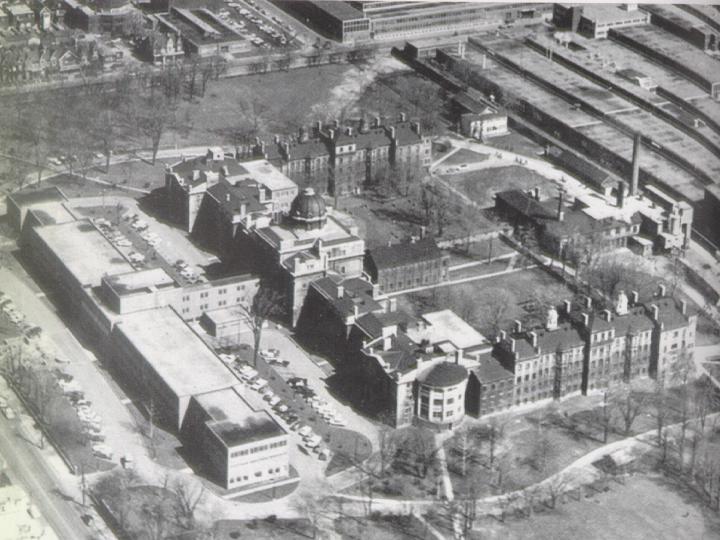
The Queen Street site post-1956, after the construction of the Administration Building.
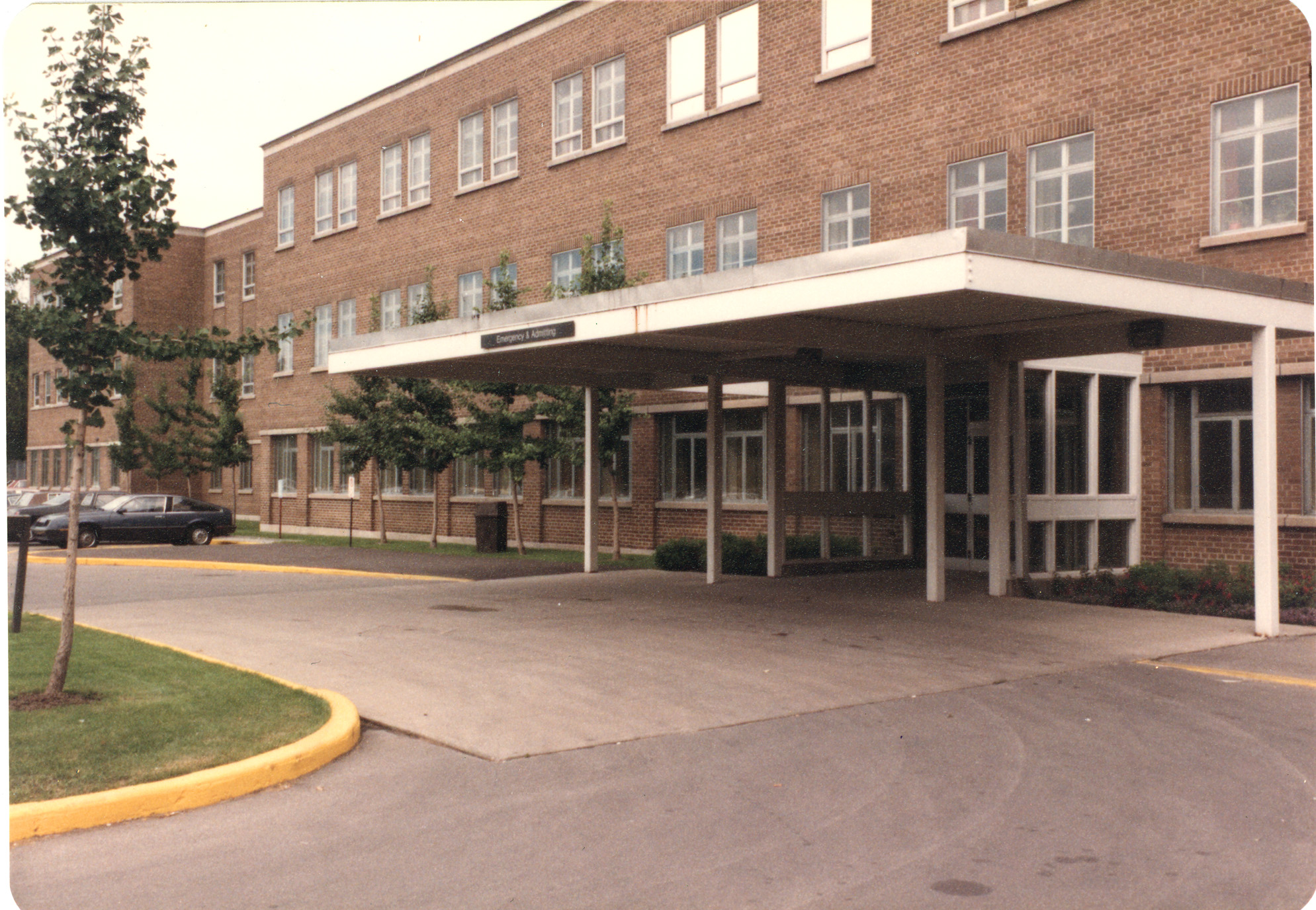
A later photo (circa 1970s) of the emergency and admitting entrance of the Administration Building.
Eight years later in 1964, the Ministry of Health announced its plans to replace the Queen Street asylum structures with new buildings on the same site. And in 1966, the name changed to the ‘Queen Street Mental Health Centre’.
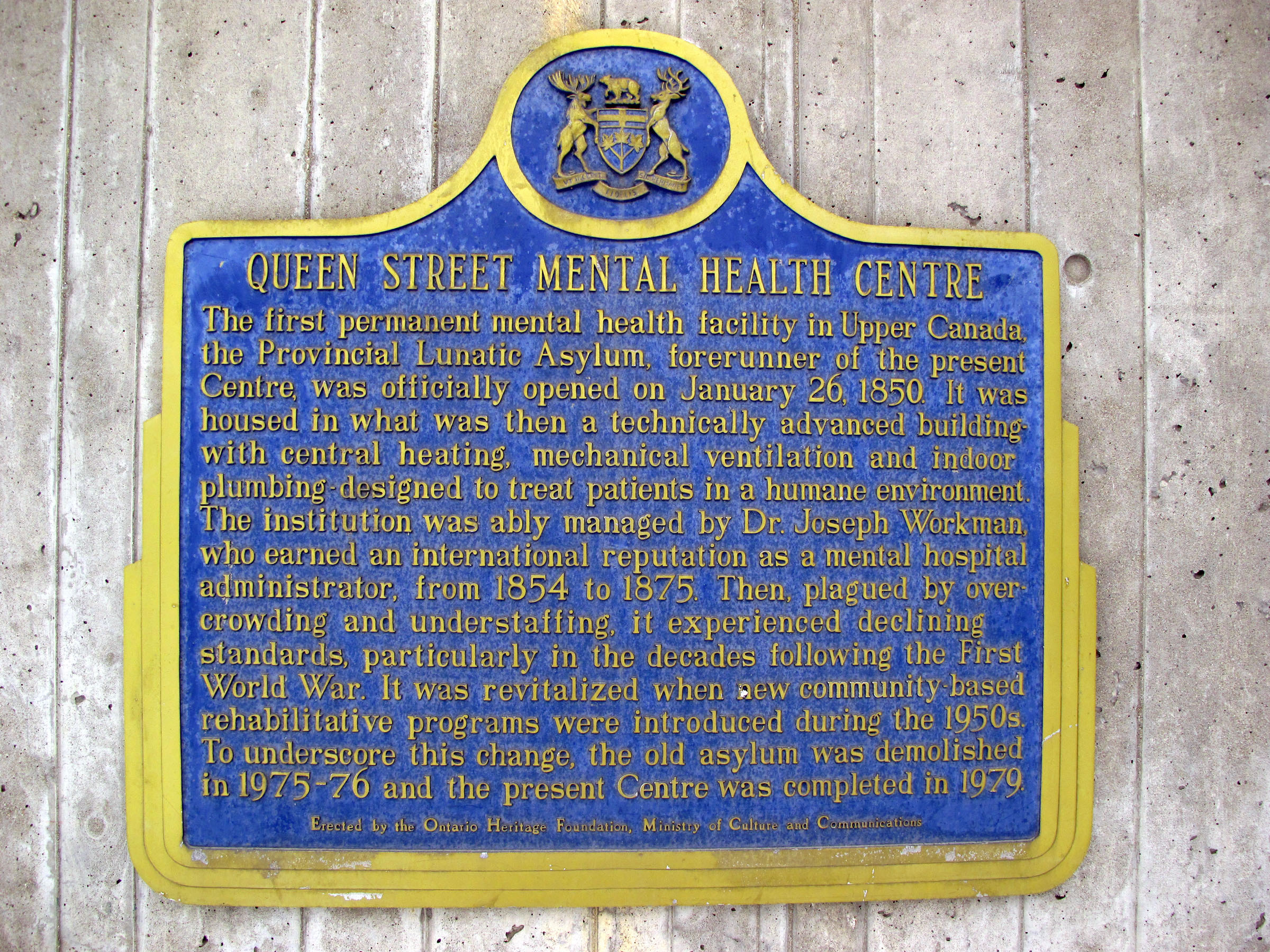
Queen Street Mental Health Centre plaque.
In 1970, construction of four new Active Treatment Units began, together with a central Community Centre. At the time, these concrete, glass, and cinder block buildings were welcomed for their contemporary modernity. Each unit was built in a residence style with 250 beds per unit and shared washrooms.
Also in 1970, a new opening was made in the wall along Shaw Street.
In 1972, Active Treatment Units 1 and 2 and the Paul Christie Community Centre opened and in 1974, Active Treatment Units 3 and 4 were completed. The construction was phased in order to permit the old asylum buildings to remain in clinical and other uses until the successor buildings were ready, and the buildings were numbered according to the order in which they were opened. That is why today, Unit 3 is beside Unit 1 and Unit 4 is next to Unit 2.
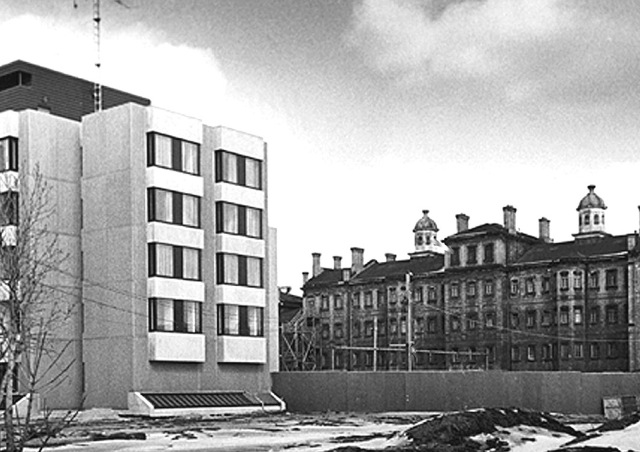
This 1972 photo of the Queen Street Mental Health Centre depicts its 19th century asylum structures as their modern replacements were constructed.
As each of the four new units was completed, the patients were moved over from the 1850 asylum building, which was demolished in 1976. This was followed in 1978 by the demolition of the former Superintendent’s Residence (later, the Nurses’ Residence) and the remaining sections of the north wall.
In 1979, the Joseph Workman Auditorium opened and the infamous ‘999 Queen Street’ address changed to 1001 in an effort to symbolically disconnect the new centre from its stigmatized past.
Also in 1979, the ‘Asylum for the Insane, Mimico’ (renamed as the ‘Lakeshore Psychiatric Hospital’ in 1966) was closed and partly re-merged with Queen Street.
The end of the 1970s was the era of the de-institutionalization of psychiatric patients who were stable on medications. Unfortunately, this came without the necessary community supports such as supportive housing. It was also the era in which the inpatient population declined from a high of 1,600 in the old asylum building to approximately 400 – 500 at any given time in the new 1970s buildings.
The 1990s saw newer anti-psychotic drugs (e.g. risperidone, 1994; olanzapine, 1998) with their side effects of weight gain and metabolic problems.
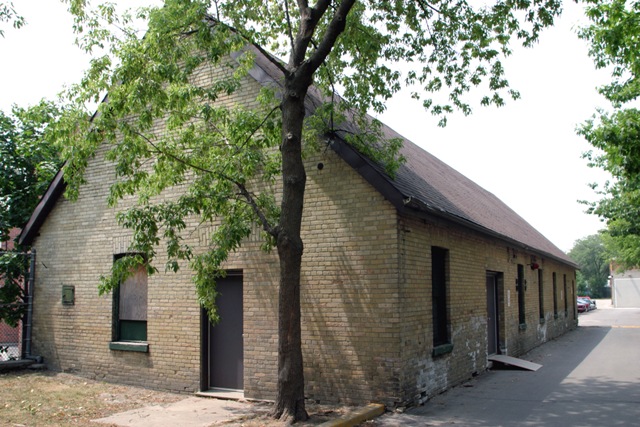
In 1997, the City of Toronto designated the surviving 1860s boundary walls (partly rebuilt in 1888-1889) and two 1889 workshop buildings as heritage structures under the Ontario Heritage Act.
Photo of the west workshop building, taken in 2005 ((c) Thomas Lackey, 2005).
Also in 1997, the Health Services Restructuring Commission (HSRC), an arms-length agency appointed by the Government of Ontario to redesign the province's health care system, released its report, which included changes to addictions and mental health care.
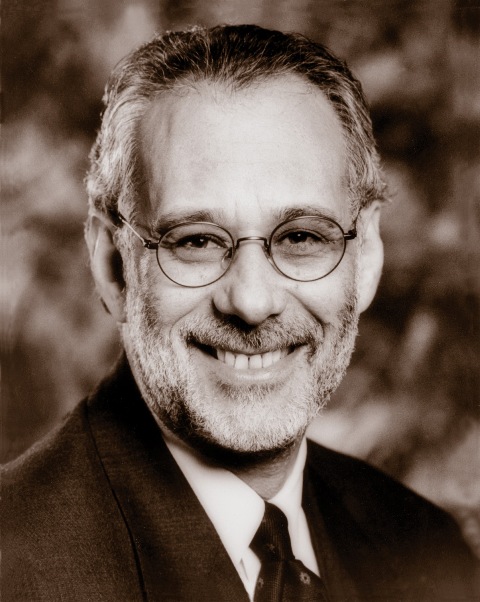
In 1998, The Centre for Addiction and Mental Health (CAMH) was formed from the merger of the Queen Street Mental Health Centre, the Clarke Institute of Psychiatry, the Addiction Research Foundation, and the Donwood Institute. Dr. Paul Garfinkel was CAMH’s founding President and CEO.
Dr. Paul E. Garfinkel, circa 1998. The new CAMH logo is shown to the right of Dr. Garfinkel's photo.
Also in 1998, CAMH was asked by the HSRC to address four key challenges: quality of care, access to care, fragmentation of services, and stigma.
Beginning in 1999 and through to 2001, comprehensive ‘visioning’ workshop sessions and consultations with hundreds of key stakeholders took place to learn how best to improve the model of care, change attitudes, and reduce stigma. As a result, the study recommended the creation of a central hub for CAMH at the Queen Street site.
For more history of CAMH and the Queen Street site: |
 Related Links |

|
Last updated: Jul 20, 2011 1:57 PM Published: Jun 10, 2019 4:13 AM ID#P59021 |